
Description

Applications of Endotracheal tubes

Our  ET Tubes are manufactured from non-toxic, medical-grade material (PVC) which makes the tube is clear, smooth, and kink-free, allowing for smooth insertion and observation. It has following applications

  • Operating rooms for general anesthesia
  • Intensive care units (ICU) for long-term ventilation
  • Emergency care for rapid intubation
  • Ambulance  for airway management

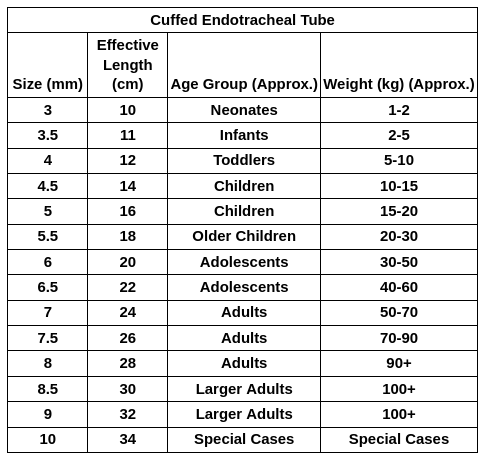
Endotracheal tubes Size Chart

Size (mm ID) Effective Length (cm) Age Group (Approx.) Weight (kg Approx.)
3.0 10 Neonates 1–2
3.5 11 Infants 2–5
4.0 12 Toddler 5–10
4.5 14 Children 10–15
5.0 16 Children 15–20
5.5 18 Other Children 20–30
6.0 22 Adolescents 30–50
6.5 22 Adolescents 40–60
7.0 24 Adults 50–70
7.5 26 Adults 70–90
8.0 28 Adults 90+
8.5 30 Larger Adults 100+
9.0 32 Larger Adults 100+
10.0 34 Special Cases Special cases

Handling Guidelines of Endotracheal tubes 

Before Use

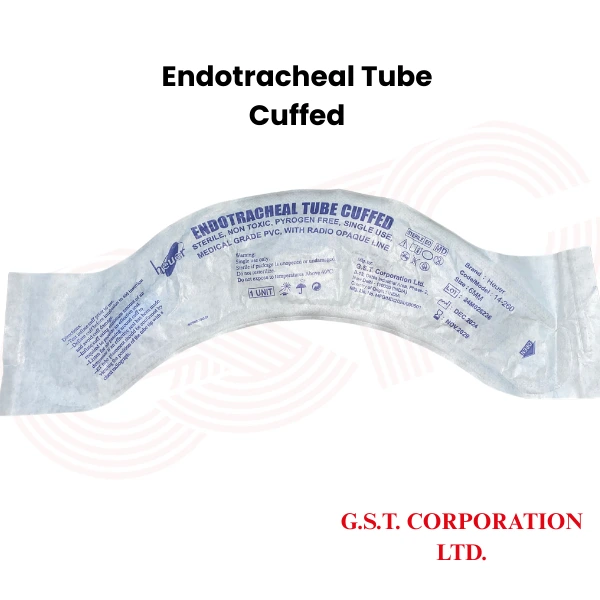
  • Verify that the sterile packaging is intact and not expired
  • Select the appropriate tube size based on patient’s anatomy
  • Test cuff inflation and check pilot balloon integrity

After Use

  • Fully deflate the cuff before removing the tube
  • Gently withdraw the Endotracheal tubes following standard medical protocols
  • Dispose of by hospital biohazard waste policies

 Certifications & Compliance

  • ISO 13485 Certified
  • CE Marked
  • Manufactured under stringent quality controls for global compliance

Why to Choose Us ?

  • India’s Trusted Leader: GSTC is India’s leading manufacturer and exporter of Endotracheal tubes & Airway Management System, with over 60 years of experience, serving clients in 30+ countries.
  • Unmatched Quality: Our devices are crafted using soft medical-grade PVC & precision-molded cuffs to prioritize patient safety.
  • Reliable Delivery: We are leading Endotracheal Tube Manufacturers, ensuring your orders are delivered on time.

Faqs

Cuffed endotracheal tube has small balloon (cuff) that secure the airway and stops the air from leaking.
The difference between cuffed and uncuffed tube is cuffed ET tube has balloon for sealing, and uncuffed ET tube stays in place without balloon.
The cuff on endotracheal tube keeps air from leaking and protects the lungs from fluids.
A cuffed ET tube uses balloon to secure the airway, and an uncuffed ET tube secures it without one.
 

Endotracheal Tubes

Parameter Specification
Available Sizes (Internal Diameter) 3.0 mm to 10.0 mm
Tip Design Soft, rounded, atraumatic tip
Safety Feature Murphy’s eye for continuous airflow
Depth Markings Clearly visible depth markings for accurate placement
Connector 15 mm universal connector compatible with standard breathing systems
Radiopacity Radio-opaque line for X-ray visibility
Sterility & Usage Sterile, single-use
Material Safety DEHP-free and latex-free

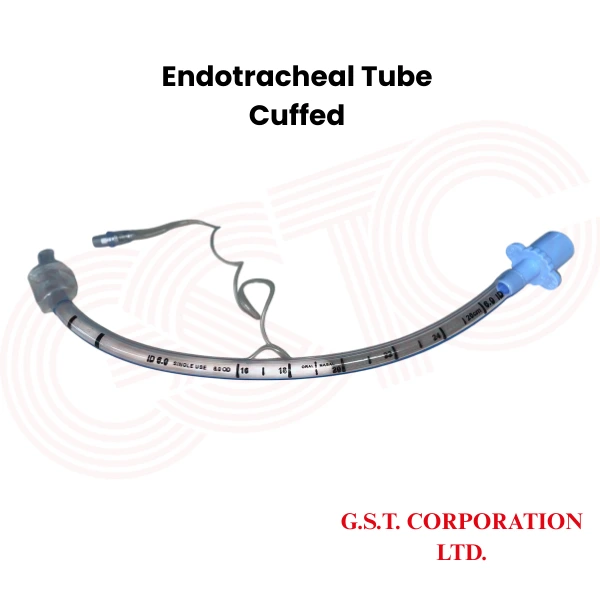
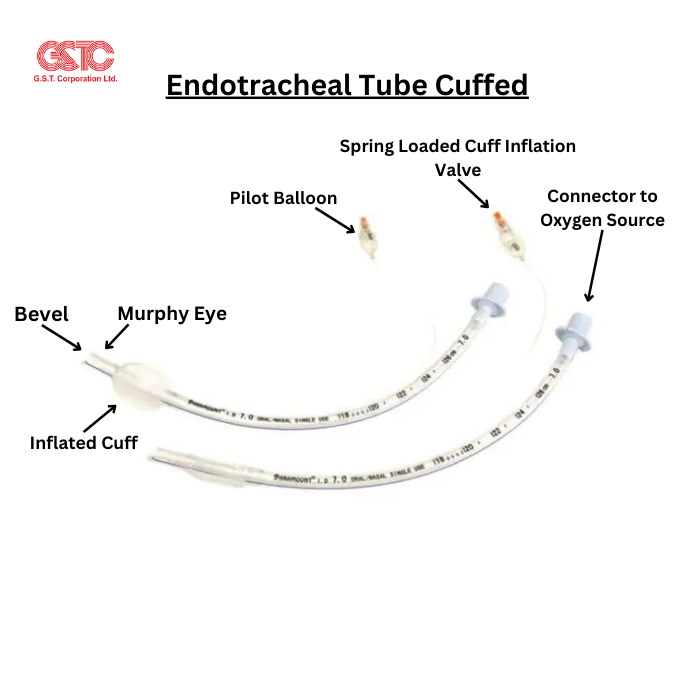
An Endotracheal tubes are plastic tubes that are inserted via the mouth or nose into the windpipe to ensure that  the airway is open and ensure proper supply of oxygen, during the surgery, critical care, or in any emergency situation. A cuffed endotracheal tube  consists of a tiny inflatable balloon (cuff) situated near to the lower end.

Category:

Description

Applications of Endotracheal tubes

Our  ET Tubes are manufactured from non-toxic, medical-grade material (PVC) which makes the tube is clear, smooth, and kink-free, allowing for smooth insertion and observation. It has following applications

  • Operating rooms for general anesthesia
  • Intensive care units (ICU) for long-term ventilation
  • Emergency care for rapid intubation
  • Ambulance  for airway management

Endotracheal tubes Size Chart

Size (mm ID) Effective Length (cm) Age Group (Approx.) Weight (kg Approx.)
3.0 10 Neonates 1–2
3.5 11 Infants 2–5
4.0 12 Toddler 5–10
4.5 14 Children 10–15
5.0 16 Children 15–20
5.5 18 Other Children 20–30
6.0 22 Adolescents 30–50
6.5 22 Adolescents 40–60
7.0 24 Adults 50–70
7.5 26 Adults 70–90
8.0 28 Adults 90+
8.5 30 Larger Adults 100+
9.0 32 Larger Adults 100+
10.0 34 Special Cases Special cases

Handling Guidelines of Endotracheal tubes 

Before Use

  • Verify that the sterile packaging is intact and not expired
  • Select the appropriate tube size based on patient’s anatomy
  • Test cuff inflation and check pilot balloon integrity

After Use

  • Fully deflate the cuff before removing the tube
  • Gently withdraw the Endotracheal tubes following standard medical protocols
  • Dispose of by hospital biohazard waste policies

 Certifications & Compliance

  • ISO 13485 Certified
  • CE Marked
  • Manufactured under stringent quality controls for global compliance

Why to Choose Us ?

  • India’s Trusted Leader: GSTC is India’s leading manufacturer and exporter of Endotracheal tubes & Airway Management System, with over 60 years of experience, serving clients in 30+ countries.
  • Unmatched Quality: Our devices are crafted using soft medical-grade PVC & precision-molded cuffs to prioritize patient safety.
  • Reliable Delivery: We are leading Endotracheal Tube Manufacturers, ensuring your orders are delivered on time.

Faqs

Cuffed endotracheal tube has small balloon (cuff) that secure the airway and stops the air from leaking.
The difference between cuffed and uncuffed tube is cuffed ET tube has balloon for sealing, and uncuffed ET tube stays in place without balloon.
The cuff on endotracheal tube keeps air from leaking and protects the lungs from fluids.
A cuffed ET tube uses balloon to secure the airway, and an uncuffed ET tube secures it without one.